Source: Večernji list
Published: 27.06.2024.
In the small Istrian town of Radovani, near the Višnjan Observatory, just 12 kilometers from Poreč, the famous and award-winning Saints Hills winery has opened the doors of its new winery, called very simply – Cantina.
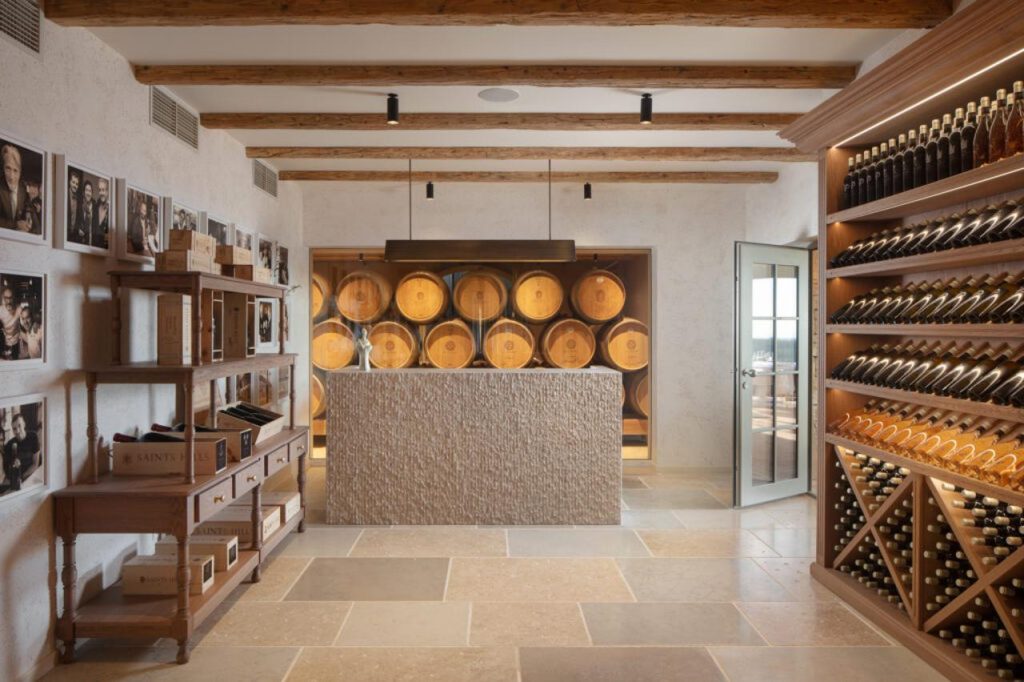
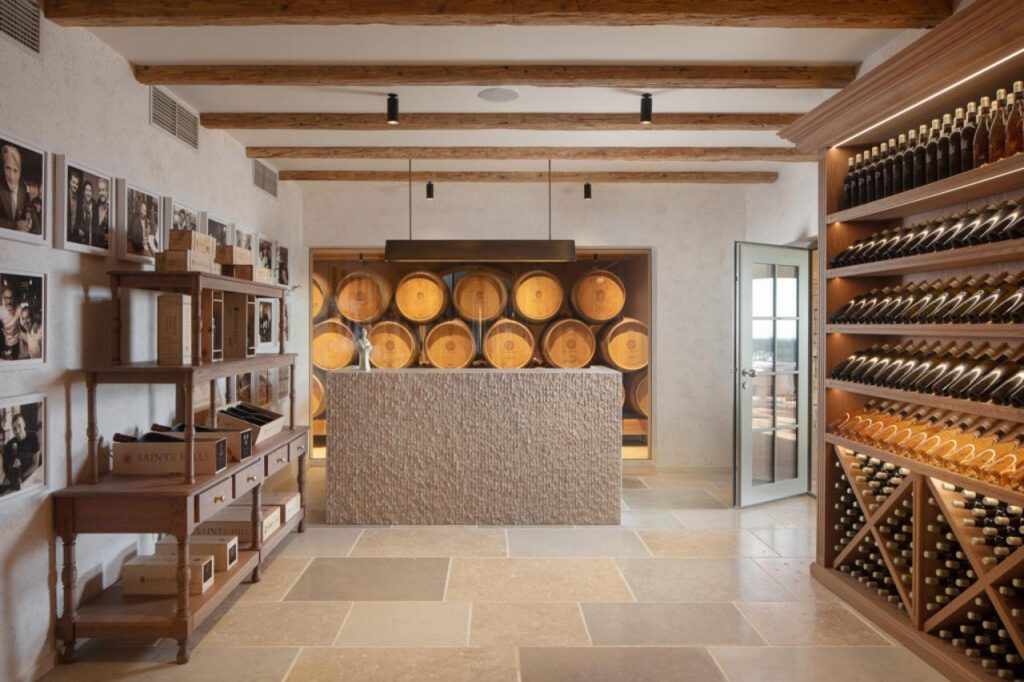
In the small Istrian town of Radovani, near the Višnjan observatory, just 12 kilometers from Poreč, the famous and award-winning Saints Hills winery has opened the doors of its new winery, called very simply – Cantina. However, the whole story surrounding this project is anything but ordinary. Surrounded by fairy-tale vineyards and olive trees, in the middle of the Istrian forest, the new winery of the Tolj family is the embodiment of an idyll, almost unimaginable in our time, and ultimately represents what we would call ultimate luxury today. Beautiful nature, peace, local gastronomy and top -quality wine.
The Saints Hills winery has been present in Istria since the very beginning, namely, it is from the vineyards of Sv. Ante, the highest peak in southwestern Istria on whose property the Cantina winery is located, that most of the Saints Hills white wines come.
Now, after more than 15 years of the presence of the Saints Hills winery in Istria, the Cantina winery is writing a tribute to the Istrian way of life. After years of harvesting grapes that traveled from Istria to Dalmatia (the Tolj family has a winery on Pelješac), a home has now been built in the heart of the vineyards for the Saints Hills white wines, and all the wonderful cultures that have shaped the terroir of this place for years can be placed in two vessels: a glass and a plate, thus testifying to the splendor of Istrian nature and its fruits.
“It all started in Istria,” Ivana Tolj tells us, adding: “The first wine made under the Saints Hills label was a wine made from Istrian grapes. Namely, on the land where the Cantina and vineyard are located today, there were two rows of vines, about sixty years old, which we harvested immediately, and that’s how our first one was created – Nevina 2007, which was not commercial, and we still keep a few bottles in our winery on Pelješac as a memento of our beginnings. Our intention was to plant olive trees on this land, but after consulting with professionals and analyzing the soil, we were told that the soil and location were ideal for planting vines, and that’s how it all began. At the same time, plantations were also being established in the south, in Komarna and Dingač, so we grew together,” she says.
Frequent visits to wineries located in the most attractive locations around the world inspired Ivana and Ernest Tolja to build something similar in Istria, so in addition to Istrian houses and taverns, they also drew inspiration from the wonderful wineries in northern Italy.
Accordingly, the interior and exterior of the Cantina follow the Istrian aesthetic, and the warmth and elegance of natural materials and shades, as well as the furniture custom-made by a local company, give this facility a special charm.
The architect Milan Pahović is responsible for the Cantina project, and the interior design was entrusted to the experienced Franić Šekoranja Studio, while the original paintings on the walls of the Cantina are the work of the young artist Silvija Golja.
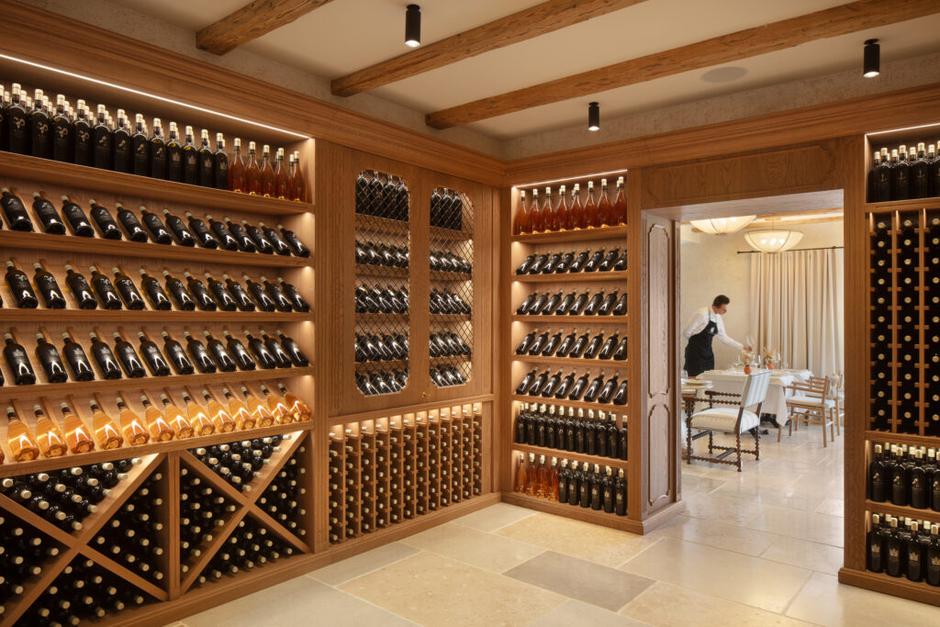
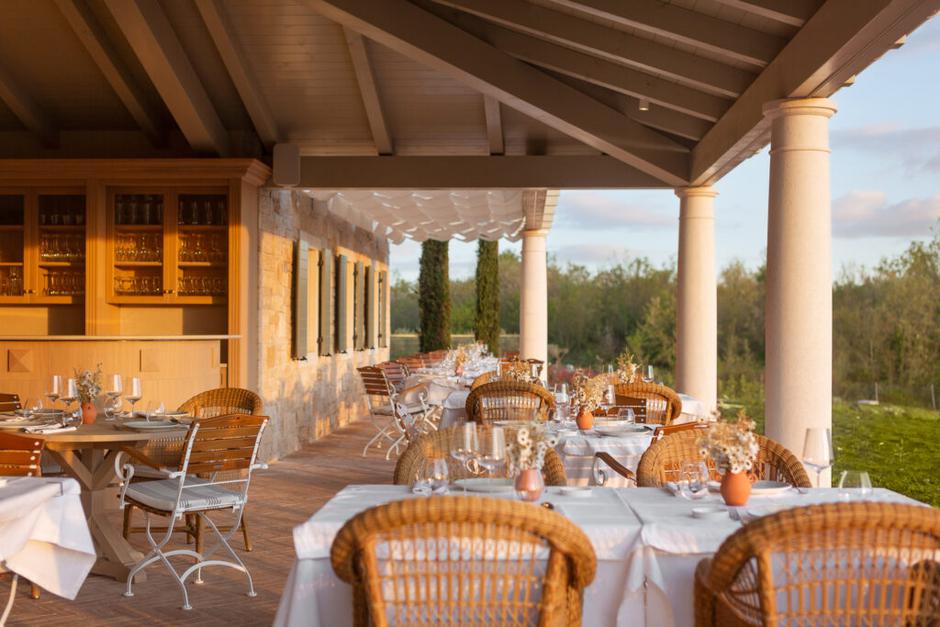
In addition to the famous and award-winning Saints Hills wines, Cantina also offers guests accommodation in three apartments and a restaurant serving a range of locally inspired delicacies with a focus on seasonal ingredients. The gastronomic part of the story is the responsibility of Deni and Josip Mandić, who have been delighting Istrians with local specialties in a somewhat more classic version for many years, which, of course, pair perfectly with selected Saints Hills wines.
“Just as every person is unique, so is every bottle of wine, and precisely according to the feeling it awakens in you. With wine, we love each other more, we sing louder and we feel everything more intensely,” concludes Ivana Tolj. Since the emphasis is on seasonal ingredients, the menu will also change seasonally, and the focus is, in addition to fresh and high-quality food, on its presentation.
For example, as required by professional rules, steak tartare is prepared in front of guests, and fish in salt is prepared using an old, almost forgotten technique of cleaning fish, in which the salt is set on fire, and after removing the skin, the fish is filleted.